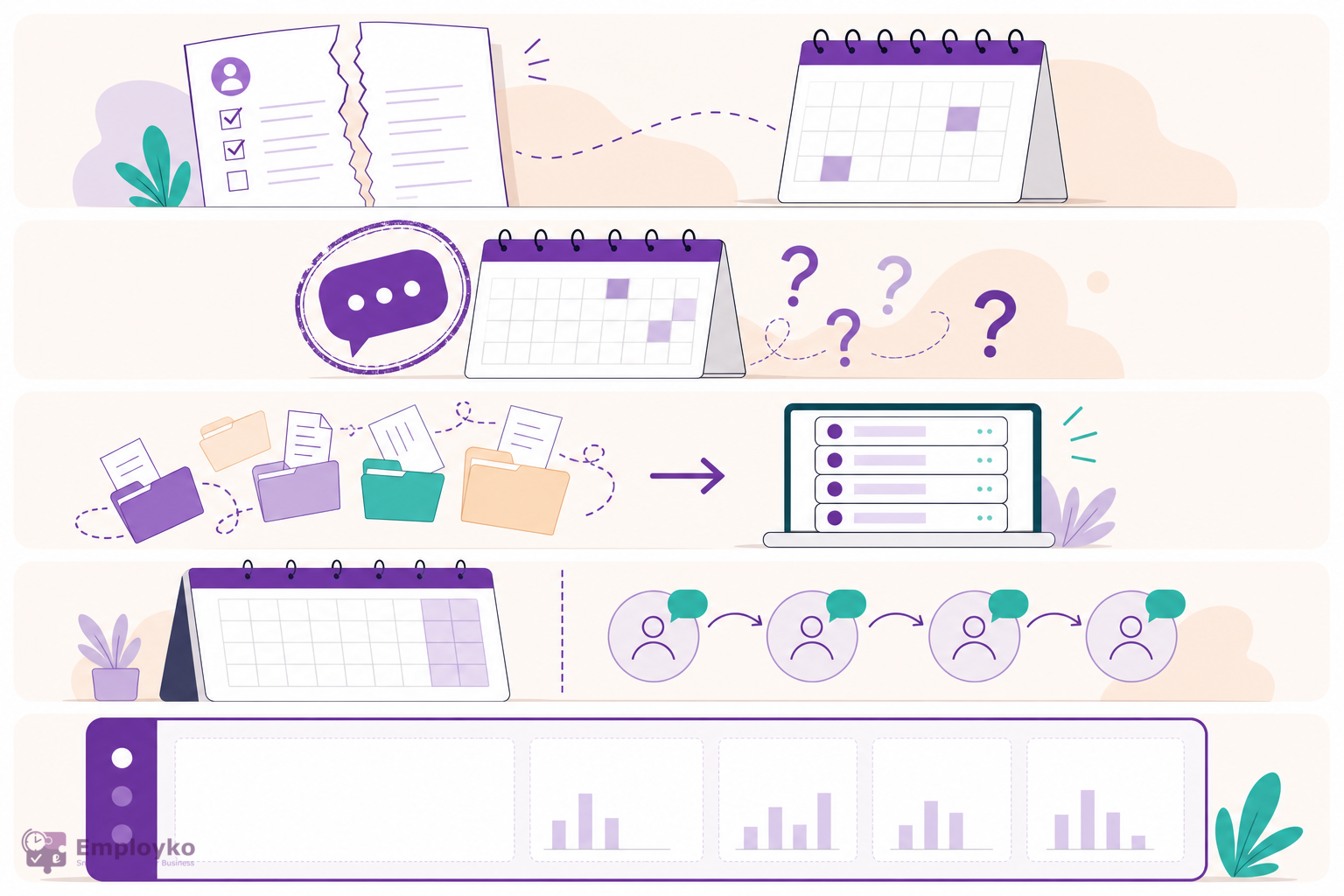
These five HR challenges are the daily reality for most HR managers running teams of 50–300 people in Bulgaria: onboarding on email chains, leave approved via Viber, and performance reviews that happen once a year — if they happen at all.
1. Onboarding without a process
The first 90 days determine whether a new hire stays. Yet most companies have no structured onboarding workflow — just a checklist in Word that someone updates once a year. Research consistently shows that structured onboarding increases 12-month retention by over 25%.
2. Leave management by chat
Managing leave through messaging apps creates two problems: no audit trail and constant interruptions. When an employee is at the doctor and the HR manager is on holiday, nobody knows who approved what.
3. Documents scattered across desks and inboxes
Employment contracts, annexes, sick leave certificates, NDAs — they exist in three versions across two inboxes and one filing cabinet. The digital transformation of HR documentation is not optional any more; from June 2025, the Electronic Employment Record makes it a legal requirement for the private sector.
4. Annual performance reviews that nobody takes seriously
A once-a-year review that covers twelve months of work is inherently subjective. The shift to continuous feedback — monthly check-ins, structured 1:1s, quarterly goal reviews — is one of the most evidence-backed changes in modern HR.
5. No data for decisions
How many days of leave are outstanding across the company? What is the turnover rate in the sales team? Without a central HR system, these questions require hours of manual calculation. In 2025, HR strategy should be data-driven — not Excel-driven.
The common thread across all five challenges is visibility. When HR data is fragmented across spreadsheets, email inboxes, and chat apps, patterns are invisible until they become crises. A unified system does not solve the challenges automatically — but it makes them manageable.