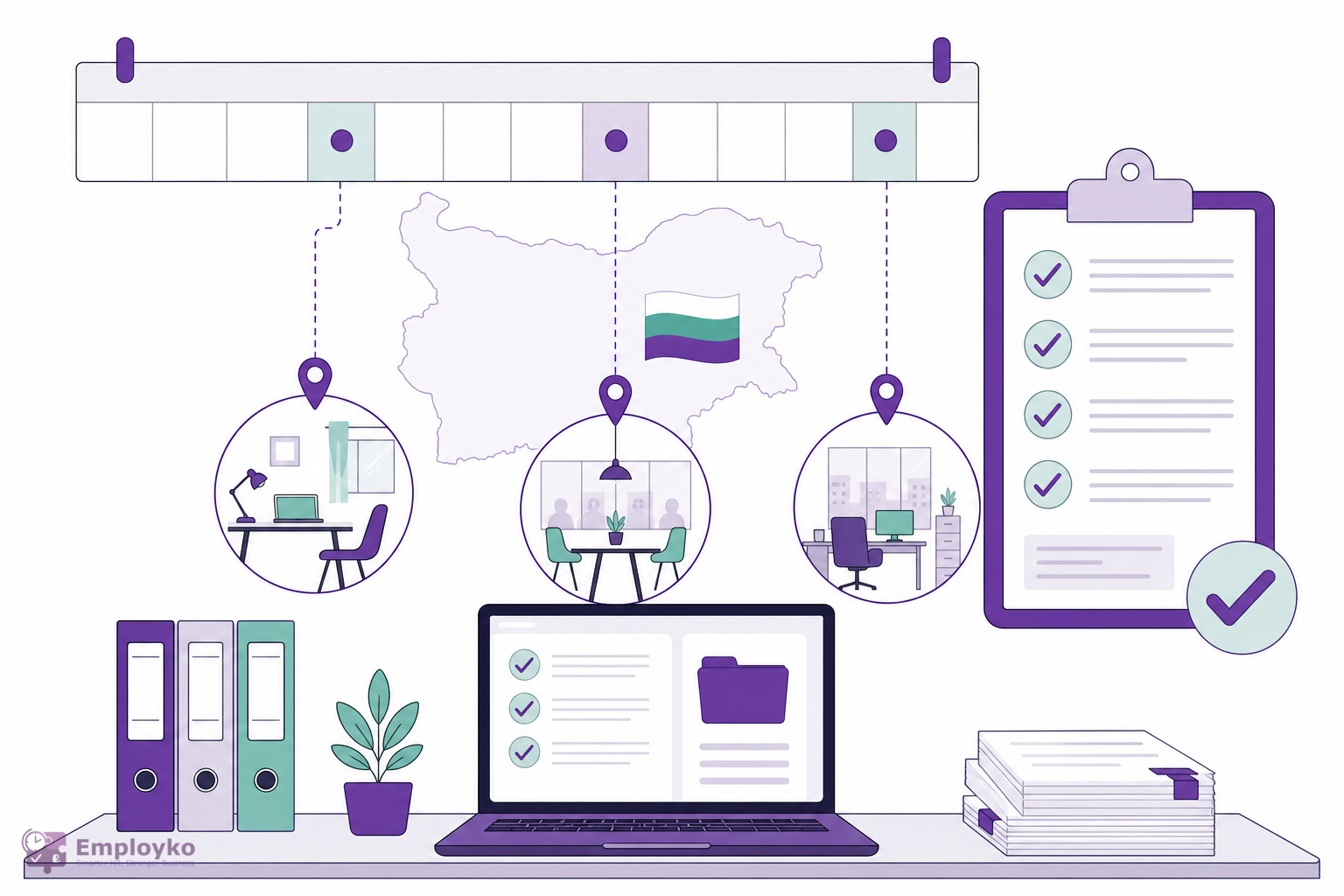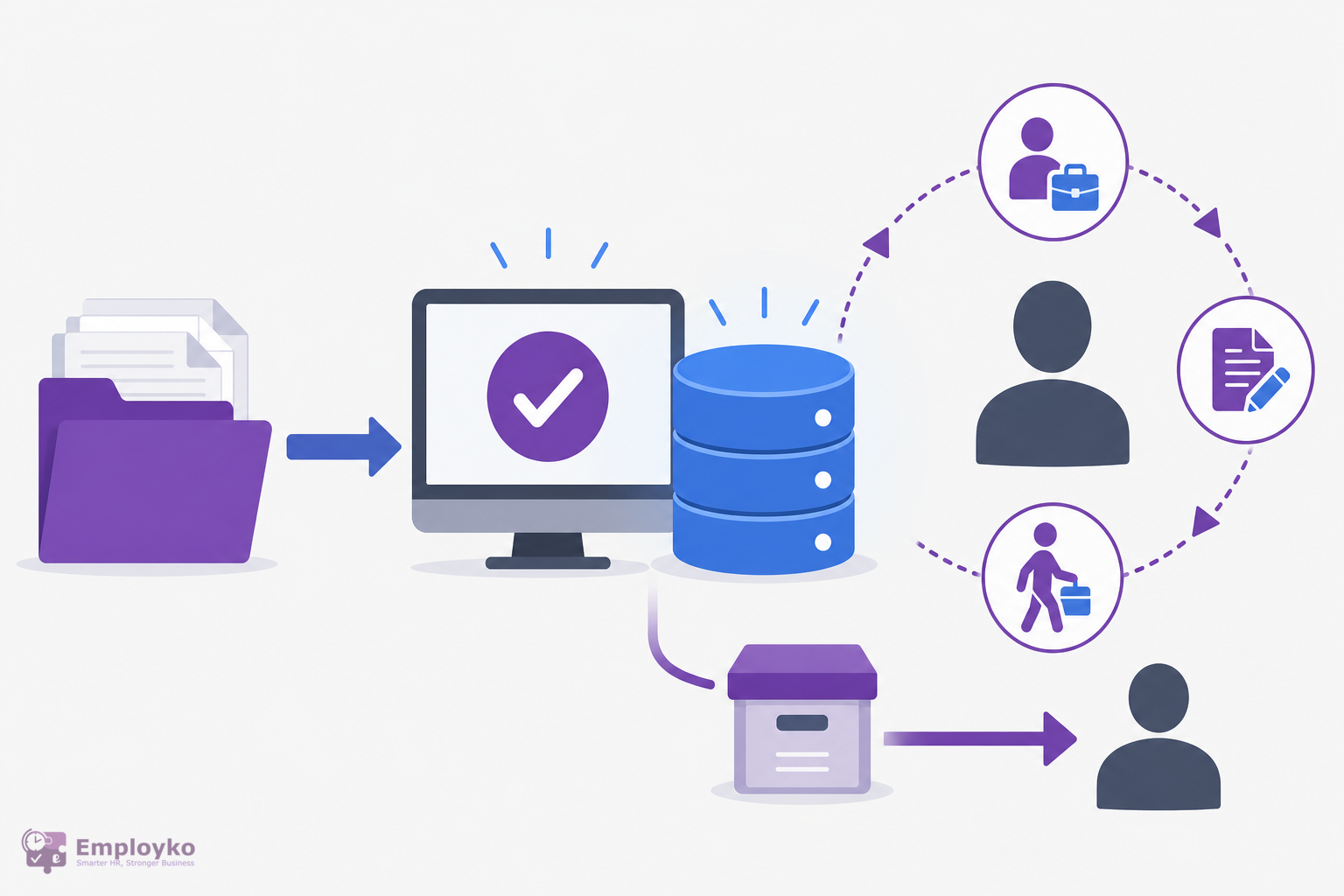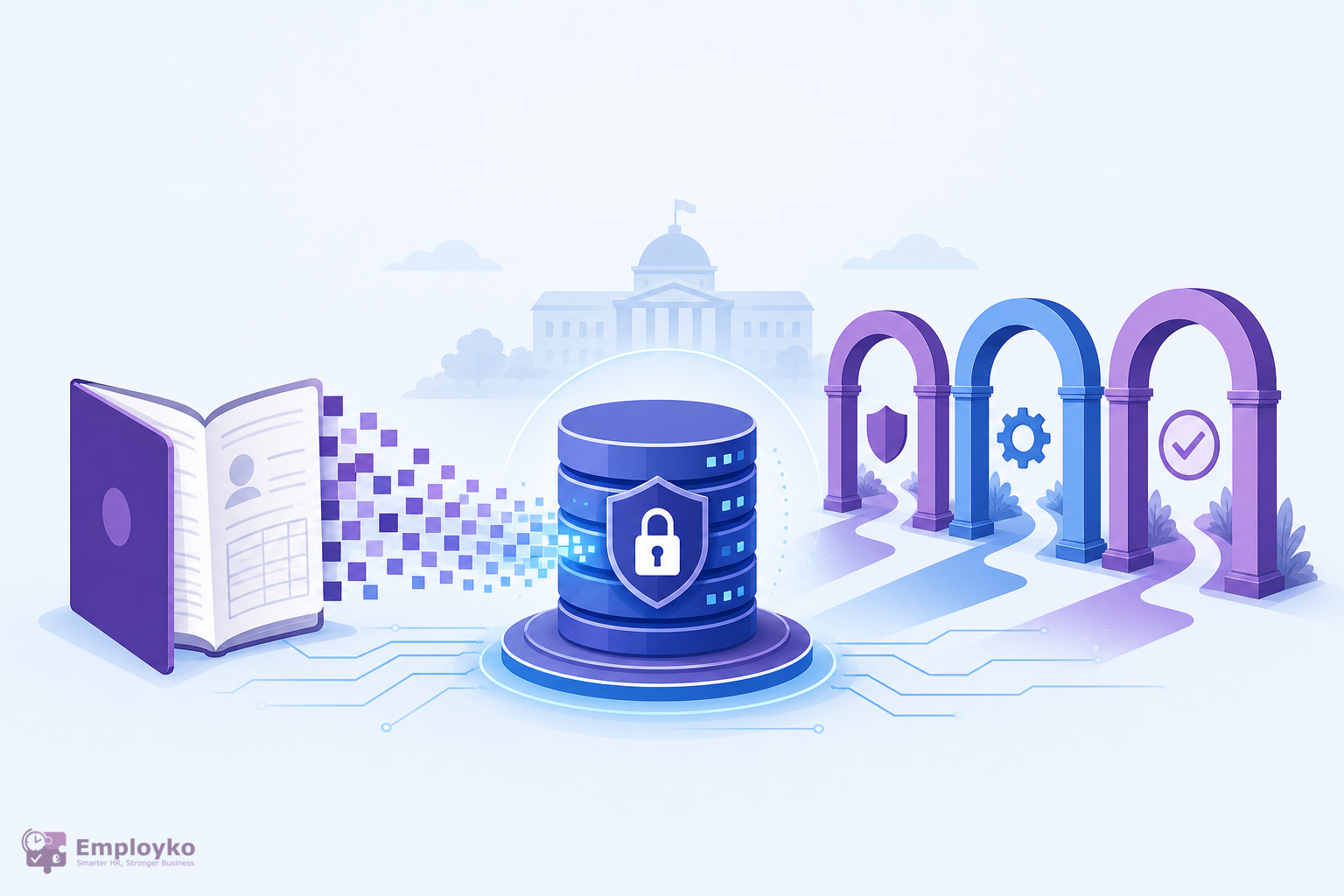
From June 1, 2025, the paper employment booklet is replaced by the Electronic Employment Record (ЕЕТЗ) — a centralised digital register maintained by the National Revenue Agency (NRA). Every employer in the private sector must start recording employment data electronically from that date. This is not a pilot programme or an option. It is a legal obligation.
What you must record and when
The recording deadlines are strict:
- Conclusion or amendment of an employment contract: within 3 days
- Termination of an employment relationship: within 7 days
- Change of employer (Art. 123/123a of the Labour Code): within 10 days
The data recorded includes: legal basis, dates, job title and NKPD code, basic and supplementary remuneration, working time, contract duration, and termination grounds.
What happens to paper booklets
Between June 1, 2025 and June 1, 2026, employers must finalise all paper booklets — recording the total length of service in words and figures, signed and stamped — and return them to employees. Failure to return the booklet on time exposes the employer to a fine of between EUR 767 and EUR 7,669 under Art. 414 of the Labour Code.
Your checklist before June 1
- Confirm your HR/payroll system can submit data to the Employment Register
- Train the staff responsible for employment record management
- Create a schedule for finalising all paper booklets
- Inform your employees how to access their records (via PIC or qualified electronic signature)
Source: Innovires Legal, Employment Law Bulgaria 2026; da-law.eu, Legislative Changes in Labour Law 2025
Practical next steps
Start by auditing your current paper-based processes: which documents are still printed, signed manually, and filed physically? Each of those is a workflow that needs to move to an electronic system before June. Prioritise employment contracts, annexes, and termination documents — these are the most frequently audited by the Labour Inspectorate and the most likely to generate fines if non-compliant.
If your HR software does not yet support electronic record-keeping that meets the GDPR and Bulgarian Labour Code requirements, this is the time to evaluate and switch — not after the deadline.