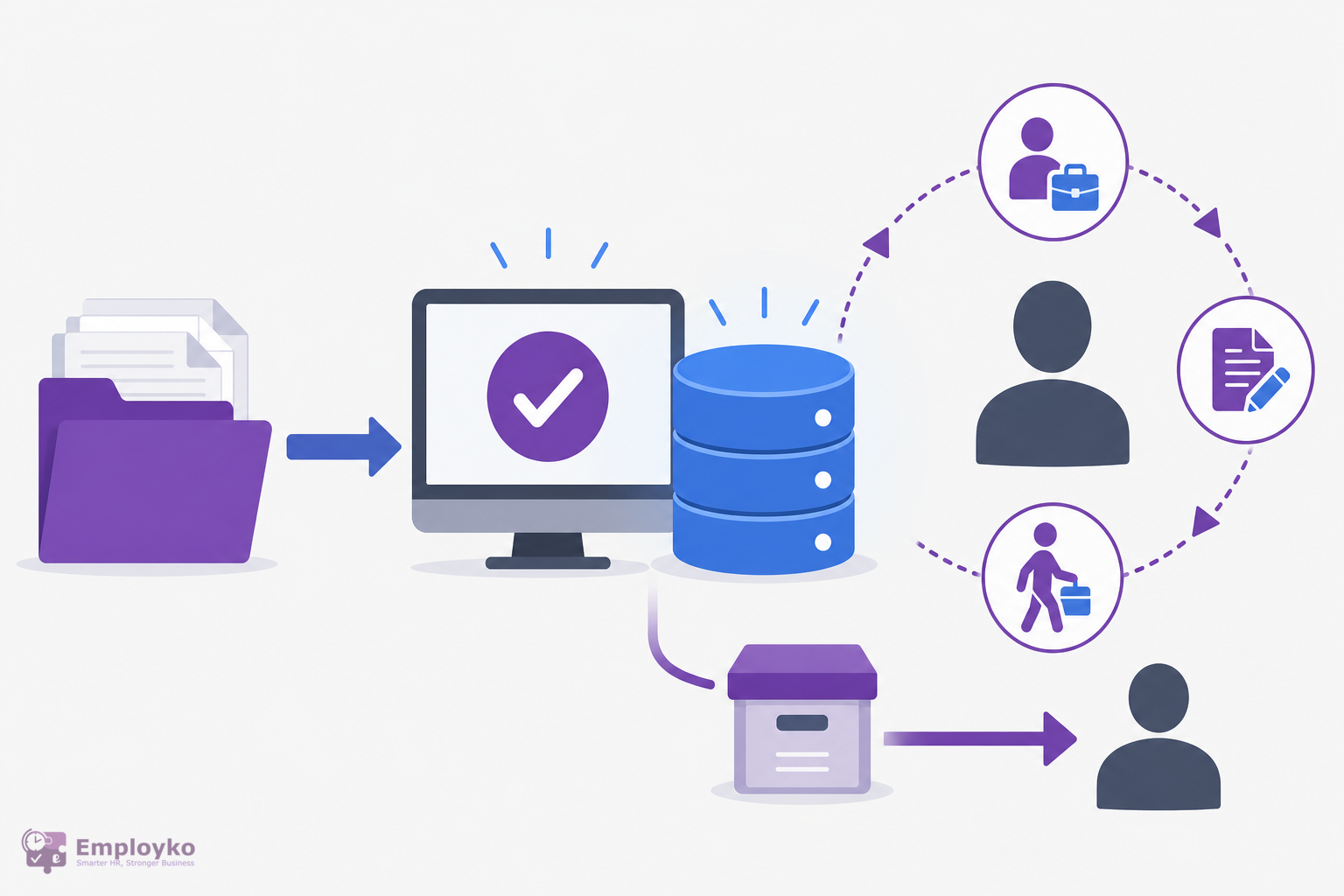
The Bulgarian Labour Inspectorate (IAT) issued 28,431 prescriptions and conducted 28,004 inspections in 2024, according to its official annual report. Fines collected exceeded BGN 12 million. For HR teams managing 50 or more employees, the probability of a routine inspection is no longer theoretical — it is a matter of when, not if.
The five violations that generate the most fines
1. Undeclared employment (Art. 414a of the Labour Code)
The heaviest single fine in Bulgarian labour law. Every undeclared employee discovered during an inspection triggers a penalty of BGN 1,500 to BGN 15,000 per person. Employers caught a second time face up to BGN 20,000 per employee. The Inspectorate uses NSSI cross-referencing and on-site worker interviews to identify cases.
2. Failure to notify or maintain ЕЕТЗ records correctly
Since June 2023, employers are required to maintain electronic employment records (ЕЕТЗ) and submit notifications through the National Revenue Agency's system. Missing, delayed, or incorrectly filed notifications are subject to fines of BGN 1,500 to BGN 15,000. As of January 2026, the system must also reflect salary recalculations in EUR for companies that updated their payroll base.
3. Excessive overtime (Art. 146 LC)
Bulgarian law caps overtime at 150 hours per calendar year per employee. Overtime exceeding the limit — even when employees agree in writing — is a violation. Each instance carries a fine of BGN 1,500 to BGN 15,000. The most common HR failure here is not tracking accumulated overtime across the year, especially for shift workers.
4. Unpaid or delayed wages (Art. 128 LC)
Wages must be paid on the dates stipulated in the collective or individual employment contract. Delays beyond 15 days from the agreed payment date constitute a violation. Fines range from BGN 1,500 to BGN 15,000. This is particularly relevant for companies experiencing cash flow issues — the inspector does not distinguish between deliberate non-payment and liquidity problems.
5. Missing or outdated health and safety documentation
Every employer is required to maintain a written risk assessment, emergency response procedures, and records of occupational health check-ups. Missing documents, outdated assessments, or gaps in training records are among the most frequently cited violations across all sectors.
What changed in 2025 and 2026
Two regulatory changes have created new compliance risks. The transition to mandatory electronic employment records (ЕЕТЗ) moved the paper trail online and made discrepancies immediately visible to inspectors. The EUR salary conversion that took effect in January 2026 — while not a Labour Code requirement — has created payroll inconsistencies at companies that updated salary amounts without issuing the required employment contract annexes.
How a digital HR platform reduces inspection risk
The core problem with compliance is not ignorance of the rules — it is the absence of a reliable system to track them across dozens or hundreds of employees simultaneously. A centralised HR platform that logs employment contract changes, tracks overtime per employee per year, and integrates with ЕЕТЗ submission workflows converts compliance from a manual audit into an automated process. The goal is not to pass an inspection — it is to be in a state where an inspection reveals nothing.